
Biotechnology Natural Products Investment Trends
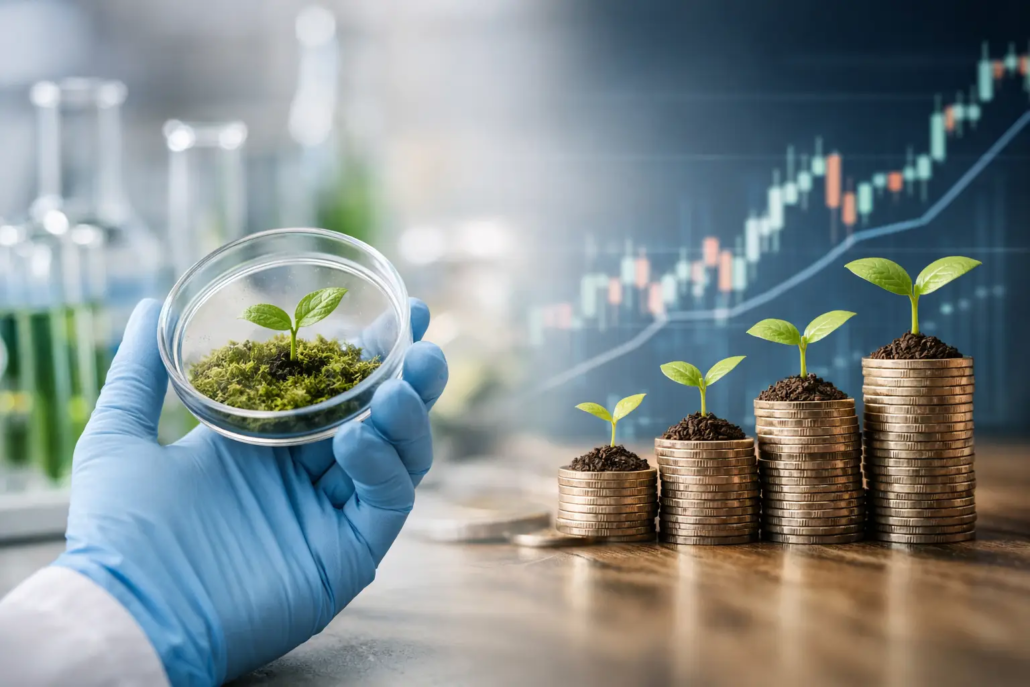
Natural-product programs are again drawing serious attention, but the relevant question for investors is not whether a source material has biological activity. It is whether a company can convert complex biological material into a reproducible, scientifically characterized, and protectable development opportunity. Biotechnology natural products investment trends increasingly reflect that distinction. Capital is moving toward platforms that reduce uncertainty in stages rather than toward early findings presented as finished therapeutic stories.
For investors and strategic partners, this is a consequential shift. Natural products can offer chemical diversity and biologically relevant starting points that may be difficult to access through conventional library-based approaches. They also introduce challenges in source consistency, fraction complexity, mechanism definition, intellectual property, and development planning. A credible investment thesis must account for both sides.
Why Natural Products Are Back on the Investment Agenda
Natural products have contributed foundational compounds and pharmacological insights across therapeutic history. Their renewed relevance is not based on nostalgia for traditional discovery methods. It follows from improvements in analytical chemistry, separation science, high-content biological assays, metabolomics, and data-supported structure elucidation.
These capabilities can make complex extracts more tractable. Researchers can progressively connect a biological signal to an active fraction, identify candidate constituents, confirm activity in defined materials, and determine whether the signal is sufficiently reproducible to justify further work. The result is not automatic de-risking, but a clearer sequence of decisions.
Interest is also being shaped by the limits of undifferentiated discovery. Large screening collections can generate volume, yet volume does not necessarily produce novel, development-relevant chemical matter. Natural materials may provide structurally distinctive compounds, new target interactions, or mechanisms that merit investigation. Their value depends on disciplined characterization, not on the mere fact that they originate in nature.
Capital Is More Selective Than the Headlines Suggest
Broad biotechnology financing conditions remain sensitive to clinical readouts, interest rates, public-market access, and strategic buyer priorities. Within that environment, research-stage natural-product companies are unlikely to attract durable capital on broad platform claims alone. Investors are asking sharper questions about what has been isolated, what has been reproduced, what can be protected, and what evidence would justify the next capital commitment.
This favors companies that define milestones before they seek to scale a program. A platform should show how it moves from research input to bioactivity-guided fractionation, compound identification, scientific characterization, candidate selection, and development planning. Each stage should narrow uncertainty and create a basis for either advancing, redesigning, partnering, or stopping work.
Biotechnology Natural Products Investment Trends Favor Evidence Refinement
The most durable biotechnology natural products investment trends center on evidence quality. Early activity in a crude extract may be useful as a research observation, but it is not equivalent to a validated candidate. Investors increasingly distinguish between a promising signal and a program that has passed a meaningful decision gate.
A disciplined evidence-refinement process addresses several linked questions. Is the activity associated with a defined fraction or compound? Can that activity be repeated across preparations? Is the material sufficiently characterized to support further studies? Does the observed effect fit a plausible biological hypothesis? Are there preliminary signals regarding selectivity, exposure, manufacturability, or safety that materially affect program design?
The appropriate answers vary by indication and modality. An oncology discovery program may prioritize selectivity and translational biomarker strategy early. A program addressing an inflammatory condition may place more weight on pathway relevance, assay orthogonality, and the feasibility of chronic administration. The key is not a uniform checklist. It is the ability to make the selection criteria explicit and match the evidence to the intended development path.
Reproducibility Has Become an Investment Attribute
Natural materials can vary with species, cultivation conditions, geography, season, harvesting, extraction methods, and storage. This variability is manageable only when it is measured and incorporated into the research strategy. A biological effect that cannot be reproduced from a defined material is difficult to finance, protect, or advance.
Investors should therefore look for evidence that a company understands sample provenance, analytical fingerprints, process controls, and batch-to-batch comparability. This does not require development-scale manufacturing at the discovery stage. It does require a credible plan for linking the active material to a controlled source and for testing whether results hold when material is prepared again.
Reproducibility also matters in biological systems. Confirming activity through complementary assays, appropriate controls, and independent preparations helps separate a genuine program signal from assay interference or incidental variation. For a research-stage company, this rigor is often more valuable than an expansive but weakly validated pipeline.
Platform Value Depends on More Than Throughput
Investors often evaluate discovery platforms through throughput, number of programs, or breadth of source access. Those measures can be informative, but they are incomplete for natural-product science. The central value driver is the platform’s capacity to make high-quality decisions from complex starting materials.
A useful platform integrates chemistry and biology rather than treating them as separate workstreams. Bioactivity-guided fractionation should be tied to assays that are relevant to the program hypothesis. Compound identification should provide enough confidence to support intellectual-property evaluation and follow-on work. Candidate selection should account for both biological evidence and practical development considerations.
This integration can create a more capital-efficient process. Resources are directed toward the fractions, structures, and mechanisms that continue to meet defined criteria, while low-confidence observations are retired early. The trade-off is that careful characterization can appear slower than broad exploratory screening. For sophisticated investors, that apparent friction may be a strength when it prevents expensive downstream commitments to poorly defined material.
Intellectual Property Requires a Specific Strategy
The investment case for natural products is frequently misunderstood through an overly simple question: can a naturally occurring compound be patented? The more relevant question is whether a company can establish a defensible intellectual-property position around a differentiated invention and its practical application.
Potential protection may involve novel compositions, purified or characterized forms, derivatives, formulations, methods of use, production approaches, combinations, or other inventions supported by the program. The scope and durability of any strategy depend on prior art, structural novelty, data quality, jurisdictional considerations, and the relationship between the claims and commercial development.
For investors, early IP diligence should be connected to the scientific workflow. If a company identifies active compounds without considering patentability until much later, it may discover that a technically interesting finding offers limited strategic control. Conversely, pursuing IP before the active material is adequately characterized can create claims unsupported by the evidence. The objective is alignment: scientific definition, legal strategy, and development intent should mature together.
Partnership Interest Is Moving Earlier, but With Clearer Boundaries
Pharmaceutical companies continue to look externally for differentiated assets and discovery capabilities. Natural-product platforms can be relevant where they provide access to chemical space, biological insight, or research tools that complement internal capabilities. Still, strategic partners generally require a legible handoff point.
For some programs, that point may be a validated active compound with defined activity and a preliminary mechanism hypothesis. For others, it may require stronger translational evidence, an established supply route, or a more advanced candidate profile. The right timing depends on the therapeutic area, the partner’s internal capabilities, and the cost of reaching the next value inflection.
Companies should avoid treating partnership as a substitute for program design. The strongest collaboration opportunities tend to emerge when the asset has been organized around clear data packages, decision criteria, and a realistic regulatory-aware development plan. Strategic flexibility is valuable, but it should rest on scientific clarity.
What Investors Should Assess Before Committing Capital
A natural-product discovery company should be evaluated as both a scientific system and a capital allocation system. The following questions help distinguish an exploratory research effort from a platform with a credible path to value:
- Does the company have a repeatable workflow for moving from complex material to defined active constituents?
- Are bioactivity findings reproduced across relevant assays, preparations, and controls?
- Is candidate selection governed by pre-specified biological, chemical, and development criteria?
- Is there an early plan for sourcing, analytical comparability, and eventual supply?
- Does the intellectual-property strategy reflect the actual material and intended use?
- Can management explain what evidence would cause a program to advance, pause, or terminate?
These questions are not intended to impose late-stage standards on early discovery. They are intended to establish whether the company understands the uncertainties ahead and has designed a disciplined way to resolve them.
GenBio’s approach reflects this principle: complex natural extracts become more investable when bioactivity-guided fractionation, scientific characterization, candidate selection, and development planning are treated as connected decisions rather than isolated technical tasks.
The opportunity in natural-product biotechnology will not be defined by the number of extracts screened or the breadth of claims attached to preliminary data. It will be defined by organizations that can build evidence carefully enough to know what they have, what they do not yet know, and what the next well-funded experiment must establish.