
What Is Bioactivity Guided Fractionation?
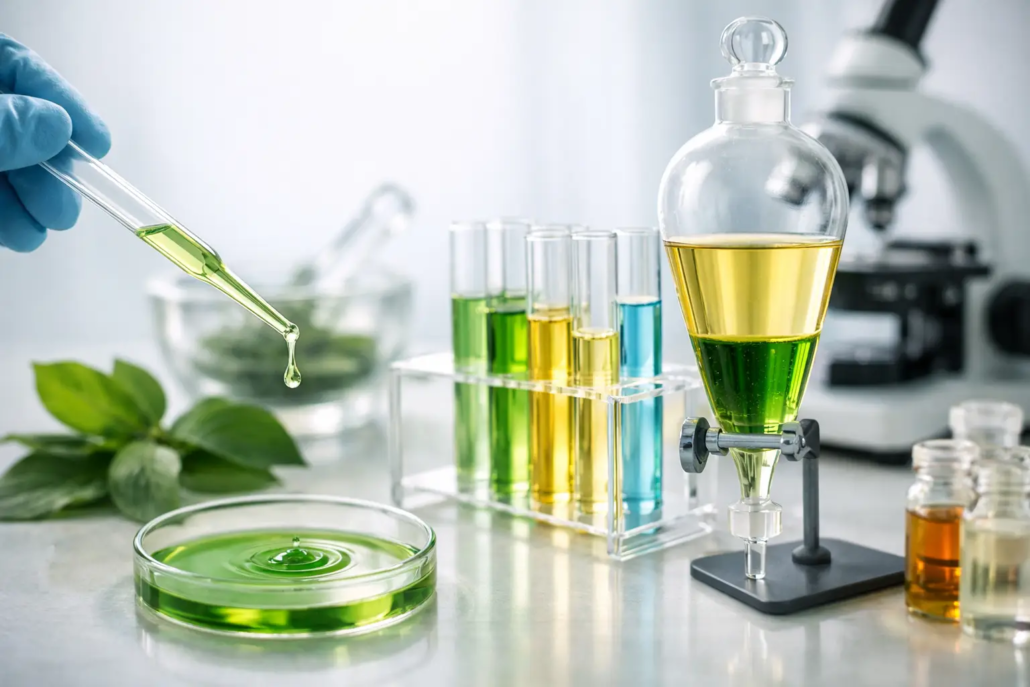
A crude natural extract may contain hundreds or thousands of chemical constituents, while only a small subset may be responsible for a measured biological effect. What is bioactivity guided fractionation? It is the disciplined process of separating that complex material into progressively simpler fractions, testing each fraction in relevant biological assays, and using the resulting evidence to direct the next separation step.
For natural-product discovery, the method creates a practical bridge between an initial observation and a scientifically characterized development opportunity. It does not assume that an active extract contains one readily identifiable compound, nor that an early assay signal is sufficient to support a therapeutic program. Instead, it establishes a repeatable path for determining which chemical components are associated with activity, whether that activity can be reproduced, and whether the resulting evidence justifies further investment.
What Bioactivity Guided Fractionation Does
Bioactivity guided fractionation is an iterative workflow. A starting material, such as a botanical, microbial, marine, or other biologically relevant extract, is separated based on chemical properties. The resulting fractions are evaluated in an assay designed to measure a defined biological response. Fractions that retain, improve, or otherwise clarify the relevant activity are selected for additional separation and testing.
The core principle is straightforward: chemistry follows biology, and biology informs chemistry. Rather than isolating compounds solely because they are abundant, visually prominent in an analytical trace, or already familiar in the literature, researchers prioritize constituents according to an experimentally defined activity profile.
That distinction matters. Natural extracts frequently contain chemically diverse mixtures with compounds at very different concentrations. Some constituents may be inactive in the relevant assay. Others may interfere with assay readouts, contribute nonspecific effects, or become unstable during processing. In some cases, the observed activity may depend on multiple constituents acting together. Bioactivity-guided work is designed to investigate these possibilities rather than prematurely assigning value to a single component.
How Bioactivity Guided Fractionation Proceeds
The process begins with a defined research question and a fit-for-purpose assay. The assay may examine a molecular target, cell-based phenotype, pathway response, antimicrobial effect, or other biologically meaningful endpoint. Its design should be sufficiently reliable to distinguish a credible signal from normal experimental variation, while remaining practical enough to support repeated testing across many fractions.
Establishing the starting extract
Researchers first document the origin, handling, and extraction conditions of the starting material. Source identity, collection or cultivation conditions, extraction solvent, processing history, and storage can all influence chemical composition. These details are not administrative afterthoughts. They are essential to reproducibility and to any future effort to reproduce, scale, or protect a finding.
The crude extract is screened to confirm activity in the selected assay and to establish a baseline. Early analytical characterization, often using chromatographic and spectrometric methods, helps define chemical complexity and provides a reference point for later comparisons.
Separating and testing fractions
The active extract is divided into fractions using techniques such as liquid-liquid partitioning, solid-phase extraction, preparative chromatography, or other methods suited to the material and program objective. Each fraction contains a narrower group of constituents than the parent extract.
Those fractions are then tested under controlled conditions. The critical question is not merely whether one fraction is positive. Researchers examine how activity distributes across the separated material. If activity concentrates in a defined fraction, that result can guide subsequent purification. If activity disappears, broadens across multiple fractions, or changes substantially relative to the original extract, the result requires investigation before advancing.
A fraction may appear more active because inactive material has been removed. It may also show apparent improvement because of assay interference, concentration effects, or altered solubility. Orthogonal controls, replicate experiments, and analytical review help determine which interpretation is most credible.
Refining active material
Fractions that meet predefined decision criteria undergo further separation. With each cycle, the chemical mixture becomes more focused and the relationship between composition and biological effect can become clearer. Analytical methods such as high-performance liquid chromatography, mass spectrometry, nuclear magnetic resonance spectroscopy, and related tools support this work by tracking constituents, identifying known compounds, and characterizing previously unassigned structures.
The endpoint is not always a single purified molecule. A program may identify one principal active compound, several active compounds with distinct profiles, or a defined multi-component fraction whose activity depends on a reproducible composition. The appropriate endpoint depends on the biological evidence, manufacturability considerations, intellectual property strategy, and anticipated development pathway.
Why the Assay Strategy Matters
Bioactivity-guided fractionation is only as informative as the biological system used to guide it. An assay with weak reproducibility or limited disease relevance can direct substantial chemistry effort toward a signal with little downstream value. Conversely, an overly complex assay may limit throughput and make it difficult to interpret fraction-level results.
A staged approach is often appropriate. An initial screen can provide the throughput needed to identify active fractions. Follow-up assays can then evaluate concentration-response behavior, selectivity, cytotoxicity, mechanism-related biomarkers, or activity in more relevant models. Each additional layer of evidence reduces uncertainty, although it also increases time and resource requirements.
This is where scientific discipline affects program quality. A biologically active fraction is not automatically a viable candidate. Its activity must be reproducible across independent preparations and experiments. It should be assessed for assay artifacts and compared with appropriate controls. Where possible, the activity should be connected to measurable chemical features and a plausible mechanism. These steps do not eliminate development risk, but they make that risk more visible and more manageable.
Common Challenges and Necessary Trade-Offs
The workflow is powerful precisely because it does not hide complexity. Activity can be lost during separation if the active constituent degrades, binds to equipment, or requires a cofactor present in the original mixture. A low-abundance compound may be highly potent but difficult to isolate in sufficient quantity. A more abundant compound may be easier to characterize and manufacture but show a less differentiated biological profile.
Synergy presents another challenge. A crude extract can demonstrate activity that no individual purified constituent fully reproduces. This may reflect a genuine multi-component effect, but it can also arise from experimental variability or from one component changing the solubility, stability, or cellular uptake of another. Testing recombined fractions and defined mixtures can help distinguish these possibilities.
There are also practical trade-offs between speed and depth. Rapid fractionation can generate early direction, but insufficient analytical characterization may make results difficult to reproduce. Extensive structural elucidation can strengthen confidence, but it may be premature before activity and developability are adequately validated. The appropriate level of effort depends on program maturity and the decisions the data must support.
From Active Fraction to Development Decision
The value of bioactivity-guided fractionation lies in its ability to support selection, not simply isolation. Once active constituents or defined active fractions have been identified, the program can move into more focused characterization. This may include confirmation in secondary assays, selectivity profiling, preliminary absorption, distribution, metabolism, excretion, and safety assessments, synthetic or supply-route evaluation, and intellectual property analysis.
For investors and strategic partners, this progression provides an evidence framework for assessing opportunity. It clarifies what has been observed, which aspects have been reproduced, where the active chemistry resides, and what questions remain before a candidate can be prioritized. A strong program does not treat these as separate activities. Chemical characterization, biological validation, manufacturability, and regulatory-aware planning should inform one another from the earliest stages.
At GenBio, this evidence-refinement model is central to converting complex natural materials into scientifically characterized development candidates. The objective is not to overstate what an early assay can prove. It is to establish the data needed to make a disciplined decision about whether a natural-product-derived opportunity warrants advancement.
The most useful question after identifying an active fraction is not simply, “What compound is present?” It is, “What evidence would make this material a reproducible, differentiated, and actionable development candidate?” Bioactivity-guided fractionation provides the structure for answering that question one experiment at a time.